Freight cost control has long been a tedious, manual process: Excel spreadsheets, stacks of carrier invoices, complex tariff structures – and at the end the nagging feeling that money is leaking somewhere. For many logistics teams, that's the daily reality.
Artificial intelligence is changing that fundamentally. Not as a futuristic technology, but as a practical tool that can be used today – delivering transparency, control, and savings that were previously simply not possible.
In this article we explain why manual freight cost analysis hits its limits, what AI actually delivers – and how logistics teams can use the technology today.
The problem: logistics costs are structurally opaque
In most companies, logistics costs are spread across various systems and based on complex tariff models. Without centralized analysis, trends and deviations often go undetected.
This leads to concrete problems that logistics teams face every day:
- Billing errors go undetected – complex tariff structures lead to errors and hidden extra costs that simply slip through manual processes.
- KPIs do not exist in real time – anyone wanting to know how cost per shipment, cost per kg, or surcharge shares are evolving has to laboriously consolidate data first.
- Tenders are based on incomplete data – carriers often only deliver an end price, without transparency on the underlying individual shipments.
- Negotiations happen without facts – without consolidated cost data, you negotiate from a structurally weaker position.
The core problem: many companies don't have full transparency over their logistics costs. Not because the data doesn't exist – but because it is not structured, not centralized, and not automatically analyzed.
What AI actually delivers in freight cost analysis
AI is not an end in itself in logistics. The value comes from where it takes over manual, error-prone work – and delivers results that simply cannot be achieved manually. In freight cost analysis, this comes down to three core areas:
1. Automatic digitization of invoice and shipment data
The first step in any freight cost analysis is data acquisition. Done manually, this means: opening invoices, transferring data, fixing errors. AI handles this step automatically.
Shipment or invoice data is uploaded – whether as PDF, Excel, or CSV – and AI digitizes and structures it automatically during import. No manual effort, no errors. Import takes just seconds.
What this means: logistics teams can start analyzing within minutes – not after days of manual data prep.
2. AI-driven tariff processing for automatic invoice auditing
Carrier tariffs are complex: different weight classes, zones, surcharges, special conditions. Manually checking every invoice line against the agreed tariff is virtually impossible in practice – which is why it often doesn't happen.
AI solves this problem: a purpose-built AI makes tariffs computable and automatically loads them into the system. Each tariff is then reviewed and released by a specialist team within 24 hours – combining machine speed with human quality assurance.
The result is a 100% audit: every invoice line is automatically checked against the contractually agreed conditions. Deviations are detected immediately and clearly flagged – including delta reports for filing claims with the logistics provider.
Typical errors in transport invoices that are detected this way:
- Incorrect surcharges
- Wrong weight classes
- Missing discounts
- Wrong zones
- Duplicate or faulty line items
According to ShipCheck, the savings potential from automatic invoice auditing typically lies between 3% and 12% of total freight costs – depending on data quality and complexity.
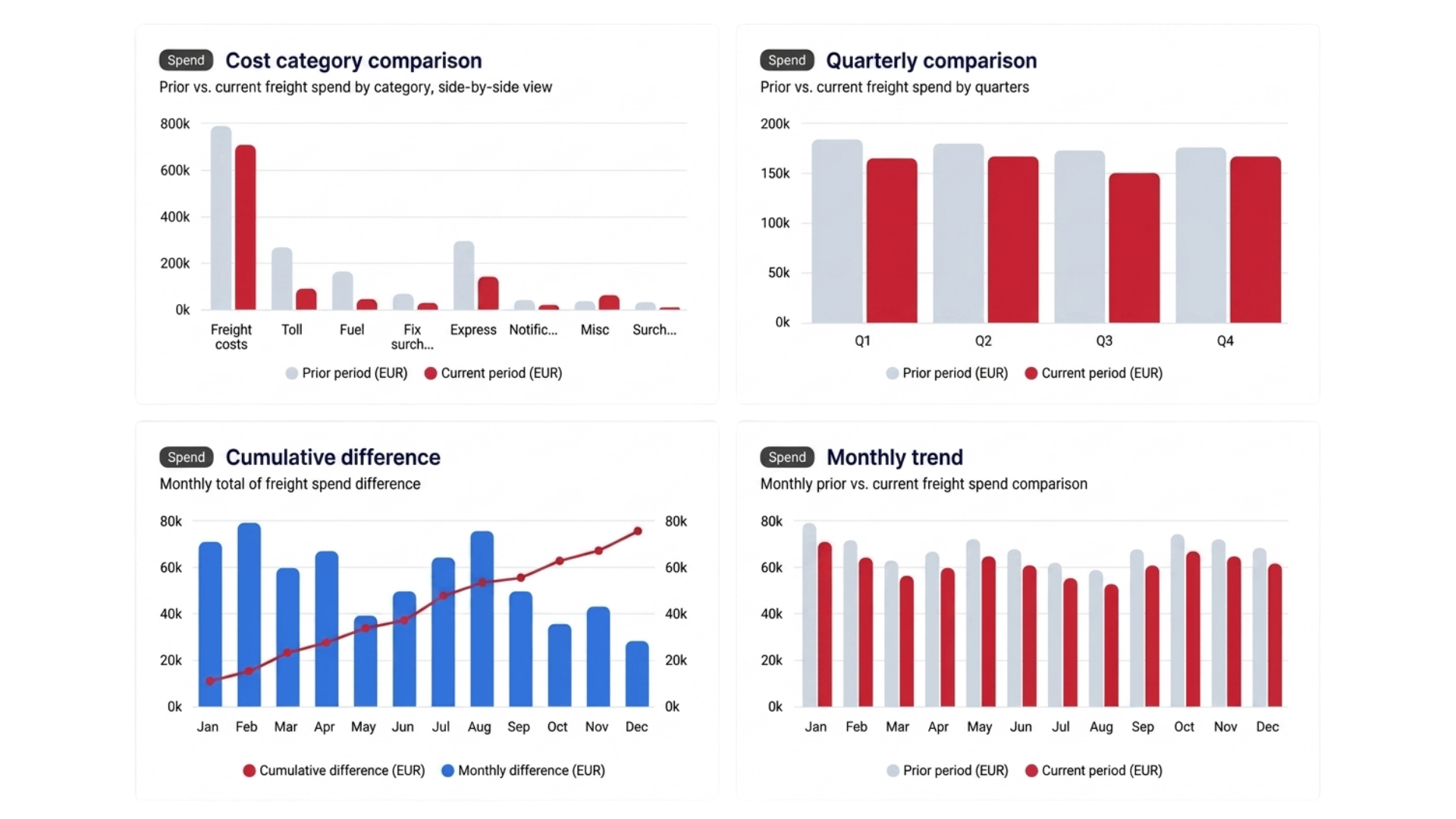
3. Automatic KPI visualization and cost analysis
KPIs, trends, and cost drivers are visualized automatically. With variance analyses, period comparisons, and structural data, logistics teams can make informed decisions – without manual reporting.
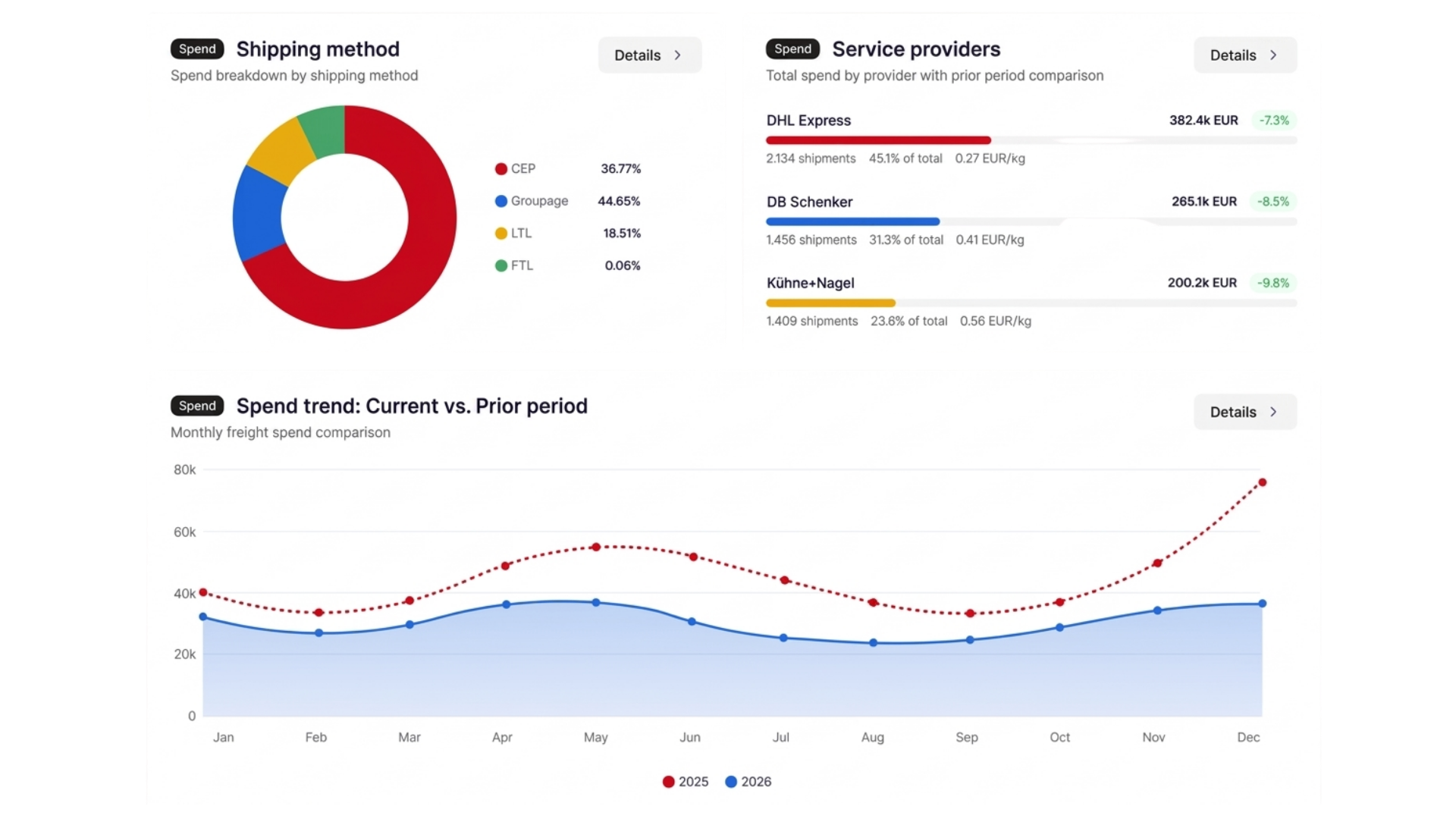
Important logistics KPIs that are evaluated automatically:
- Cost per shipment
- Cost per kg or pallet
- Cost development over time
- Cost by carrier
- Surcharge shares such as fuel or toll
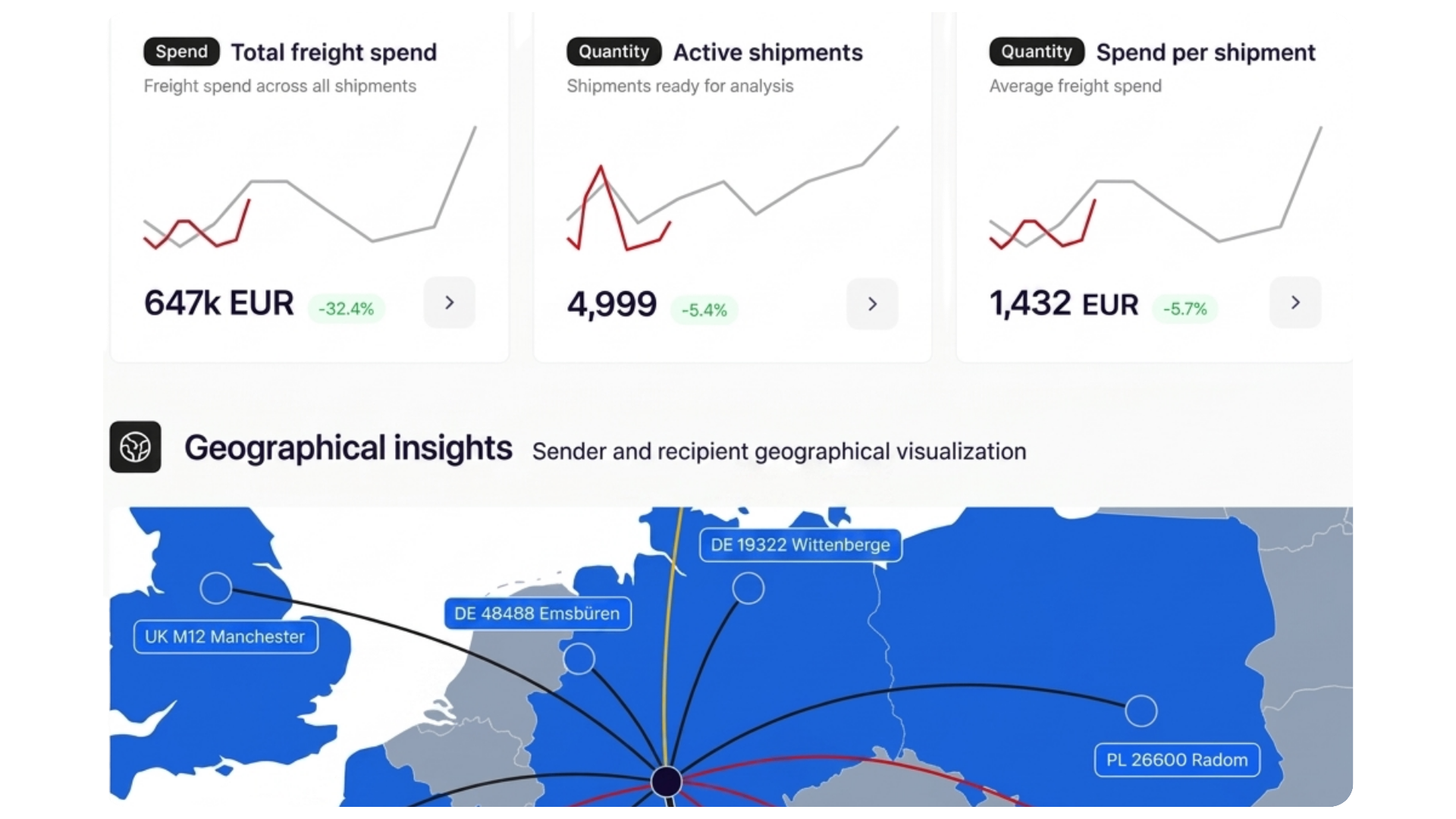
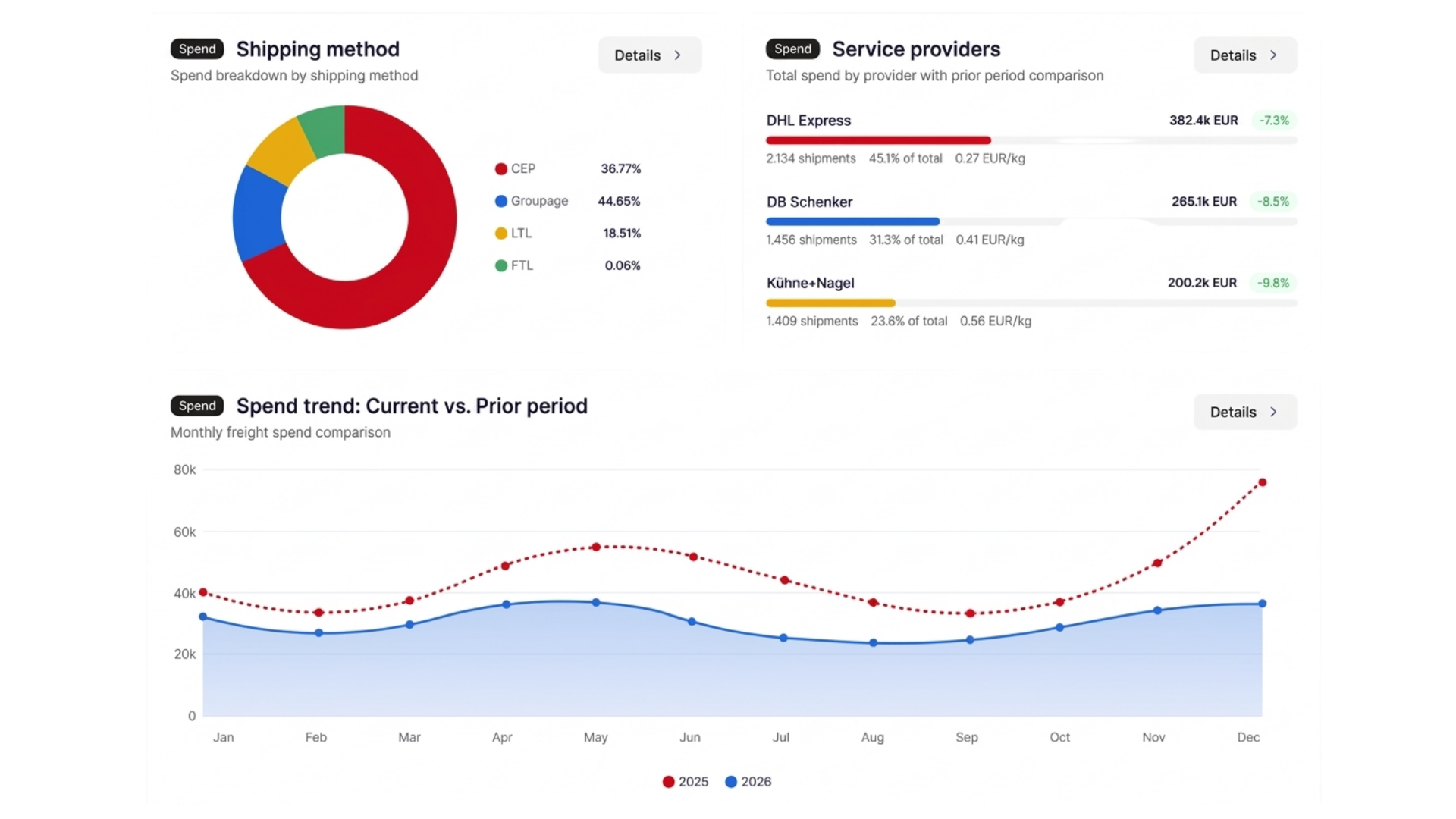
Through maximum transparency and consolidated reporting across the entire logistics operation, nothing escapes the team. The dashboard bundles all logistics costs centrally – with full transparency and individual controlling reports.
AI and human expertise: not an either-or
An important point: AI in freight cost analysis does not replace logistics expertise – it amplifies it.
ShipCheck was developed by HDS International Group – Europe's and Asia's leading consultancy for logistics cost management. The benchmarks, algorithms, and workflows of the software are based on real projects from thousands of mandates and over 20 billion in negotiated logistics costs.
The model follows a clear principle: AI handles speed and scale – digitization, tariff processing, pattern recognition. The specialist team of more than 50 logistics professionals handles quality assurance and approval. Every imported tariff is reviewed and released by experts within 24 hours.
The result is decades of logistics expertise, digitized and available at any time – 7 days a week, 24 hours a day.
AI-powered tendering: better award decisions through a data foundation
An often underestimated use case for AI in logistics is tendering. In tenders, carriers often deliver only an end price – without transparency on the underlying individual shipments.
AI-powered tendering changes that fundamentally: bids are calculated at every cost component level and evaluated against actual transport volumes. The results of all tender participants are displayed by mode and lane in a best-price matrix – enabling informed award decisions instead of budget guesses.
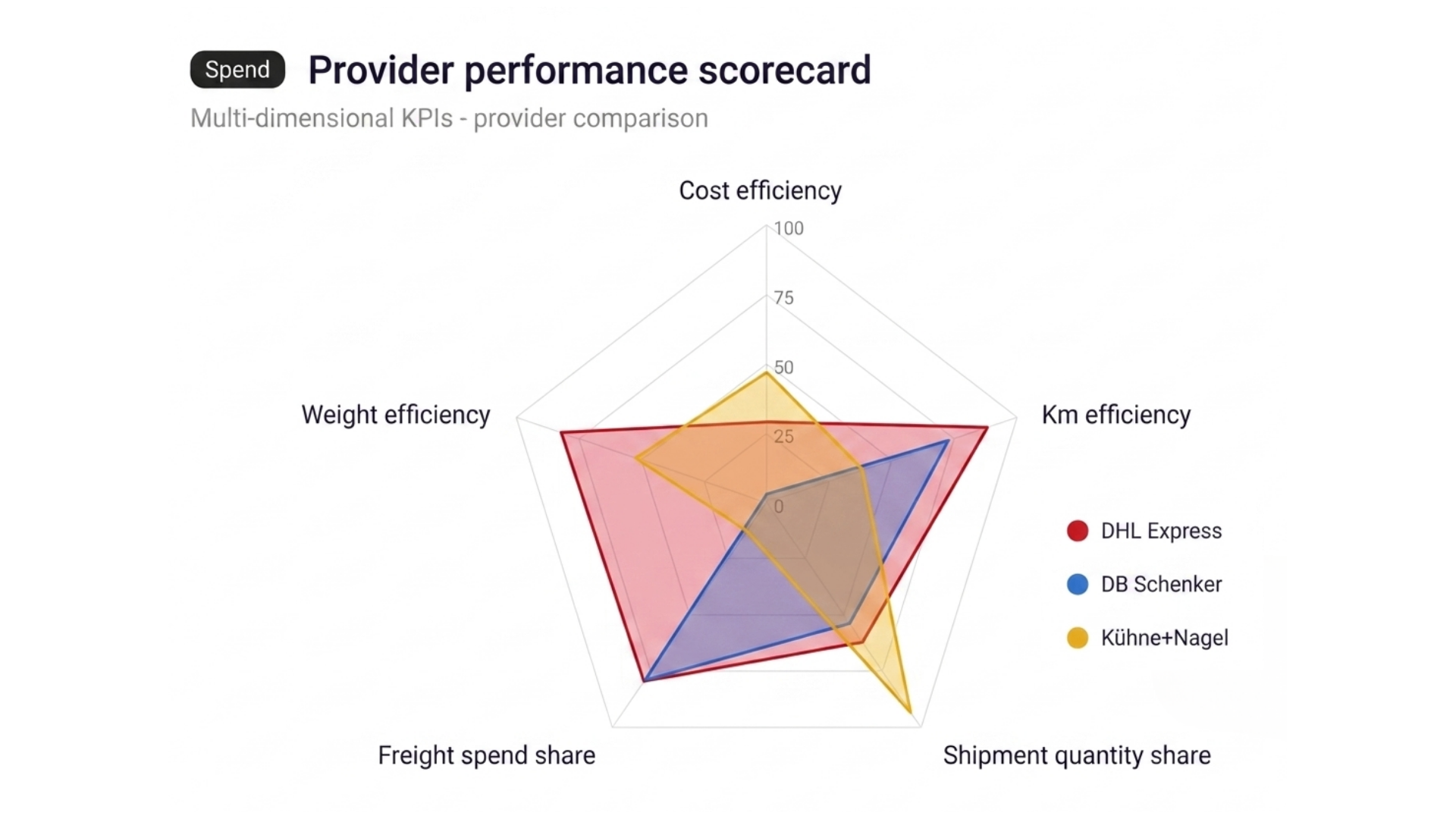
In data-driven tendering, historical shipment data is used to evaluate offers realistically and simulate scenarios. The result: better award decisions, more sustainable cost improvements, and noticeably stronger negotiation outcomes.
Who is AI-powered freight cost analysis relevant for?
AI-powered freight cost analysis is especially relevant for companies with regular transport and logistics costs – and becomes more valuable the more complex the structures are:
- Multiple carriers in use – the more service providers, the more tariffs, the greater the error potential.
- Complex tariff models – parcel, road, air, ocean, or special transports, each with their own structures.
- International transport structures – different conditions, zones, and surcharges across markets.
- Finance and operations in focus – wherever freight costs are relevant for both the operational team and controlling and the CFO.
How to get started
One of the most common objections to new software is implementation effort. With AI-powered freight cost analysis, this objection is invalid: getting started requires no system integration.
The process in three steps:
- Upload data – import shipment or invoice data as PDF, Excel, or CSV.
- AI digitizes automatically – structuring and processing happen with no manual effort.
- KPIs and trends visible immediately – after the first upload, anomalies are shown directly in the dashboard.
Setup takes only a few minutes. The KPI dashboard is completely free to use and without restrictions – a risk-free entry that delivers value immediately.
Conclusion: AI gives logistics teams back control
Freight cost analysis used to be a resource-intensive, error-prone, and often incomplete task. AI changes that structurally:
- Invoices are digitized and audited automatically – 100%, not by sampling.
- Tariffs are processed by AI and released by experts – within 24 hours.
- KPIs and cost drivers are automatically visible – without manual reporting.
- Tenders are based on real data – not on budget guesses.
The result is full transparency over logistics costs – the nightmare of every carrier and the secret weapon of every logistics team.
Frequently asked questions
What exactly does AI do in freight cost analysis?
AI digitises carrier invoices and shipment data, matches them to the stored tariffs and checks every line item automatically. Discrepancies between contract and invoice become visible at shipment level, without anyone manually reconciling Excel lists.
Does AI fully replace manual freight invoice auditing?
AI handles the complete audit of all invoices and flags anomalies. The decision on how to handle a discrepancy - dispute, clarify or accept - stays with the logistics team. AI provides the data basis, not the judgement.
Which data is needed for an AI freight cost analysis?
Essentially the carrier invoices and the corresponding tariffs or conditions. Additional shipment data from ERP or TMS increases the value of the KPIs, but is not a must to get started.
How quickly do you see results?
As soon as the tariffs are stored and the first invoices are imported, audit results and KPIs are generated automatically - usually within the first billing period.
Do I have to upload tariffs myself?
No. Tariff digitisation is handled by the provider. You supply your existing tariff documents, and the preparation is done for you.
How does the analysis help with tenders?
Because every shipment is available with its actual costs, offers can be evaluated not just on average prices but on the real shipment profile. That changes the negotiating position considerably.
Which KPIs are generated automatically?
Among others cost per shipment, cost per kg, surcharge share, cost development per lane as well as comparisons between service providers.
What company size does this pay off for?
As soon as several hundred shipments per year run through more than one service provider, the complexity usually exceeds what can sensibly be audited manually.
Related ShipCheck solutions
More articles
Automatically Evaluating Freight Invoices and Shipment Data: Structuring PDF, Excel and CSV with AI
Read article
Freight Cost Control: Why a One-Time Invoice Audit Isn't Enough
Read article